Ambitious Goals and Wider Implications
Beyond immediate fiscal measures, Tusk’s broader vision points toward structural ambition:
-
His administration sees this as a stepping stone toward closing the economic gap with major Western economies, particularly the United Kingdom — proposing that within the next five to six years, Poland could approach comparable levels of GDP per capita.
-
The government also frames this acceleration as part of a narrative of return migration, asserting that improved prosperity will attract Polish citizens back home and retain top talent.
Domestically, the message is clear: 2026 will be a year for strong growth, stronger infrastructure, and stronger competitiveness. However, the emphasis on public investment and ambitious targets means that policymakers will need to carefully balance fiscal discipline with long‑term strategic gains.
Looking Ahead: Risks and Expectations
While the rhetoric at the Warsaw Stock Exchange was confident, analysts have pointed out that ambitious growth projections always carry risk. External shocks, such as further geopolitical escalation, global market volatility, or supply chain disruptions, could dampen expectations. Nonetheless, the government’s focus on data‑driven forecasts and its emphasis on diversifying investment — including high tech, energy, and infrastructure — are intended to build resilience.
For 2026 to truly live up to its “turbo acceleration” label, the government will need continued cooperation with the private sector, transparent policy implementation, and the ability to adapt to evolving global economic conditions.
Conclusion: A Defining Economic Moment
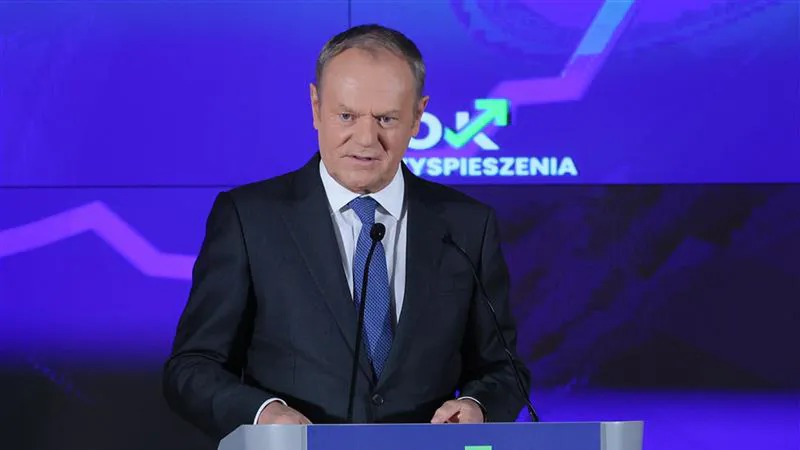
In reconvening at the Warsaw Stock Exchange a year after the landmark “Year of Breakthrough” announcement, Prime Minister Donald Tusk painted an ambitious picture of Poland’s economic future. By rebranding 2026 as the Year of Turbo Acceleration, he set high expectations for investment‑led growth, enhanced economic confidence, and strategic progress toward long‑term goals like rivaling Western European economies. With broad support from state institutions and clear policy outlines, this initiative could mark yet another milestone in Poland’s post‑pandemic economic development.